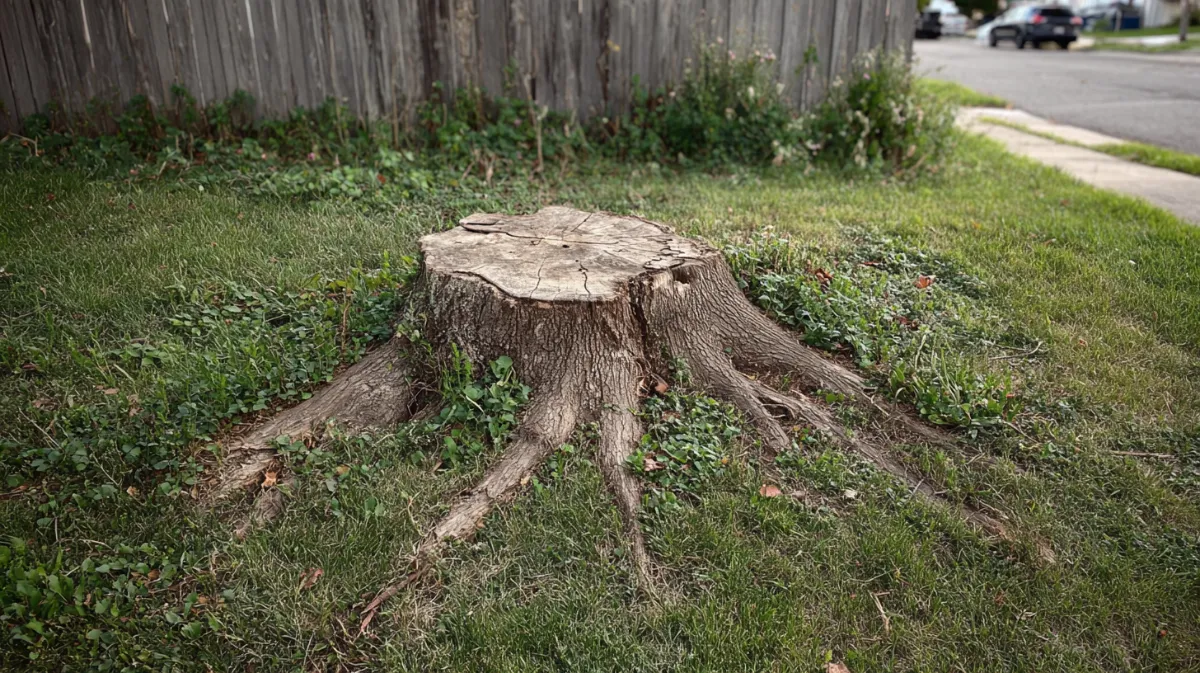
Roots don't always stay underground. A big tree's roots spread out near the surface, and over the years they push up through the lawn, heave a brick path or tip a patio stone just enough to catch your toe. Sometimes the tree is long gone and the roots are what's left after the stump was cut. Sometimes the tree is still standing, maybe in the yard next door. Surface root grinding takes those roots down level with the soil, or a little below it, so you can mow, walk and lay pavers again. We see a lot of it in older neighborhoods around Petaluma, where mature trees have had decades to spread, and on the sandy, root-filled ground out near Sebastopol.
Below, we cover the signs roots need attention, what's safe to grind on a living tree, how the work is done, and how to keep roots from coming back. If the stump itself is still there, start with stump grinding.
Signs surface roots are a problem
Watch for:
- Roots poking above the lawn that the mower keeps hitting.
- A path, driveway edge or patio lifting or cracking along one line.
- Raised ridges in the grass running out from a stump or tree.
- Shoots popping up from roots in the lawn after the tree was cut.
- Bumps and dips that make the yard hard to walk across.
Roots near the surface also compete with your grass for water, which is why the lawn often thins out right on top of them.
Dead roots vs. living trees: what's safe to grind
Roots from a stump that's already been cut are fair game. With no tree above them, they aren't holding anything up, and grinding them just speeds up what decay would do anyway. Living trees are a different story. Their surface roots carry water and nutrients, and they help anchor the tree, especially on the side that takes the wind. Cutting too many, or cutting big ones close to the trunk, can stress the tree or leave it unstable. When the roots belong to a tree you want to keep, we'll talk through which ones can go and which should stay. For large or valuable trees, we recommend having a certified arborist take a look first. Sometimes the better fix is moving the path, not the root.
How the work gets done
- We trace the roots back to where they come from and check their size.
- We call 811 two working days ahead, since this job breaks ground too.
- We cut back the turf along the root and expose the section that's causing trouble.
- We grind the root down to just below the soil line along that stretch.
- We fill and level the trench with topsoil so you can reseed or reset the pavers.
Keeping roots from coming back
Roots from a removed stump don't regrow once they're ground down, though a leftover piece may still send up a shoot or two for a season. Clip them as they appear. A living tree is different, since its roots keep growing. The goal there is to buy time and steer them. Watering deeply and less often encourages roots to grow down instead of spreading along the surface. A root barrier set along the edge of a walkway or patio can turn them away from the hardscape. And when you redo a path, giving the trunk a little more room saves you from doing this again in a few years.
Clearing roots and stumps across a larger property? See how we handle stump grinding for HOAs and commercial sites.
Common Questions
Yes, but whatever's on top has to come up first. For a brick or stone path, we can work with you or your landscaper: lift the pavers, grind the roots, regrade the base, and the path goes back down level. For a poured concrete walk that's cracked from roots, the broken section usually needs replacing anyway, and we grind the roots once it's out.
Just below the soil line along the problem area, enough that topsoil and grass cover them with no ridge left behind. Under a path or patio, we go a bit deeper so there's room for the gravel and sand base. We don't chase roots far underground. Deep roots aren't causing trouble at the surface, and leaving them alone keeps the job smaller.
Shallow tree roots take up water before the grass can get to it, and the shade from the tree does the rest. Grinding down dead roots from an old stump fixes that part for good. With a living tree, you'll get better results by watering deeply, adding a little topsoil over thin spots, or switching that patch to a shade-tolerant groundcover or mulch.