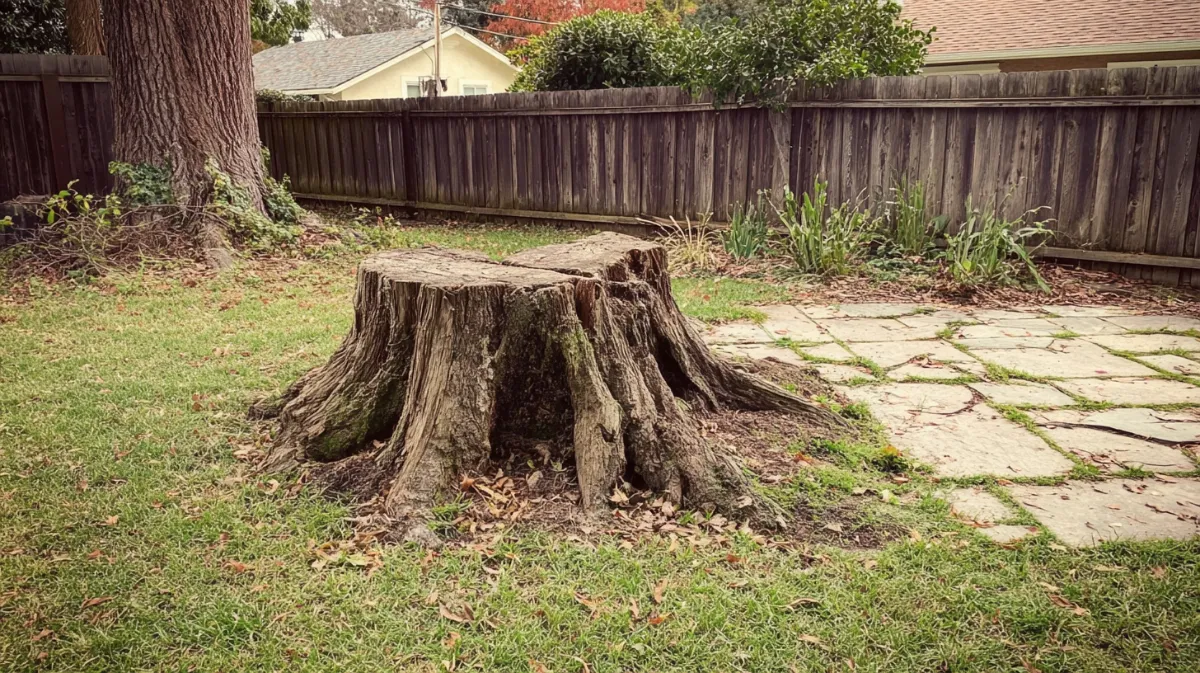
Most stumps we grind have been sitting there a while. The tree came down in a winter blow, or in the fire years, or because it was leaning toward the roof, and the stump got left for later. Later turned into three years of mowing around it. Stump grinding is the fastest way to get that ground back. A grinder uses a spinning steel wheel lined with carbide teeth to chew the wood into chips, working down and across until the stump sits below the soil line. Nothing gets pulled out, so the lawn, the fence and the sprinkler lines around it stay put. We do this all over the county, from big jobs on acreage outside Windsor to a single plum stump in a tight side yard in Cotati.
Below, we cover the signs a stump needs to go, how grinding works on different kinds of wood, what to expect on the day, and what to do with the spot afterward. If you're building on top of the area instead, read about full stump removal, since that's a different job.
Signs it's time to grind that stump
Some stumps sit for decades without bothering anyone. Most don't. It's worth calling when:
- New shoots keep coming up around the base or out in the lawn.
- The wood has gone soft or crumbly, which draws termites, carpenter ants and fungus.
- It's in the way of the mower, a patio, a fence line or a garden you want to put in.
- Someone has tripped on it, or it sits where kids play.
- It's close to the house, the foundation or a walkway.
- You're getting ready to sell, and it makes the yard look unfinished.
If two or more of those sound familiar, the stump is costing you more to keep than to grind.
How grinding works on oak, redwood and everything else
The operator swings the cutting wheel side to side across the top of the stump, lowers it a little, and swings again, shaving the wood off in layers until the wheel is below ground level. The kind of wood changes the job. Valley oak and live oak are dense and hard, so they grind slowly and wear down the teeth. Redwood is softer but often huge, with wide flared bases and burls. Eucalyptus is stringy and wet. Apple and plum stumps are small and quick. Stumps are measured across the widest point at ground level, and that width, along with the species, sets most of the time and the price. Rocks are the other wild card. Our clay soil tends to hide them in the root flare, and hitting one means stopping to dig it out before the wheel goes back in.
What a grinding visit looks like
- Before the day, we put in the 811 request. State law asks for two working days of notice before anyone digs, and the locators flag buried gas, water and power lines at no charge.
- We walk the yard with you, check the gate width and settle on depth. Lawn needs less. A new tree needs more.
- We clear rocks and debris from around the stump and set up so chips stay away from windows and cars.
- We grind the stump and the thick surface roots right next to it.
- We rake out the grindings and backfill the hole, haul them off or stack them for your garden, whichever you picked.
Getting the spot ready for whatever comes next
Once the stump is gone, you're left with a shallow bowl of wood chips mixed with soil. For lawn, pull out most of the chips, fill with topsoil, tamp it down lightly and seed or lay sod. The spot will settle a bit as the leftover wood breaks down, so plan to add a little more soil after the first winter. For a flower or vegetable bed, clear out the grindings and bring in good soil before planting. Fresh chips are better used on paths. And if a new tree is going in, give it a few feet of distance from the old stump when the yard allows it.
If roots are still lifting the lawn after the stump is gone, our surface root grinding service takes care of those too.
Common Questions
A small fruit tree stump can be gone in a few minutes. A big oak or redwood can take a couple of hours. The rest depends on access, rocks hidden in the roots and how many stumps you have. We give you a realistic time window when we quote the job, so you know how long to plan on us being in the yard.
Usually not. Grinders come in different sizes, and the smaller ones are built to roll through a garden gate and across a lawn. If your gate is very narrow or the yard has steep steps, tell us when you call so we bring the right machine. On soft ground or a nice lawn, we can lay down plywood so the wheels don't leave ruts.
The main one is that the roots stay in the ground. They break down on their own, but the spot can settle over time and need more topsoil. Grinding also leaves more chips than most people expect, which we can haul away. And if you plan to build a foundation right there, grinding isn't enough. That's when full stump removal is the better choice.