Sebastopol was apple country long before it was anything else. Gravenstein orchards covered the hills around town for most of the last century, and as many of them gave way to homes and vineyards, the old trees came out and the stumps often stayed. Walk through west county today and you'll still find apple stumps at the edge of a yard, next to redwoods, oaks and the odd Douglas fir closer to the coast. The soil helps explain why so much grew here. A lot of the area sits on Goldridge fine sandy loam, a soft, sandy soil that roots spread through easily. Along the Laguna on the east edge of town, willows and oaks grow thick, and those stumps sit in wetter ground that needs a drier week.
We grind stumps in Sebastopol and out along the west county back roads, from in-town lots near downtown to orchard and acreage properties. Most of it is regular stump grinding. If you're building a studio, an ADU or a new driveway over the spot, stump removal pulls the whole root ball and leaves firm ground behind. Call us for a free estimate.
Old orchard stumps and the ground after
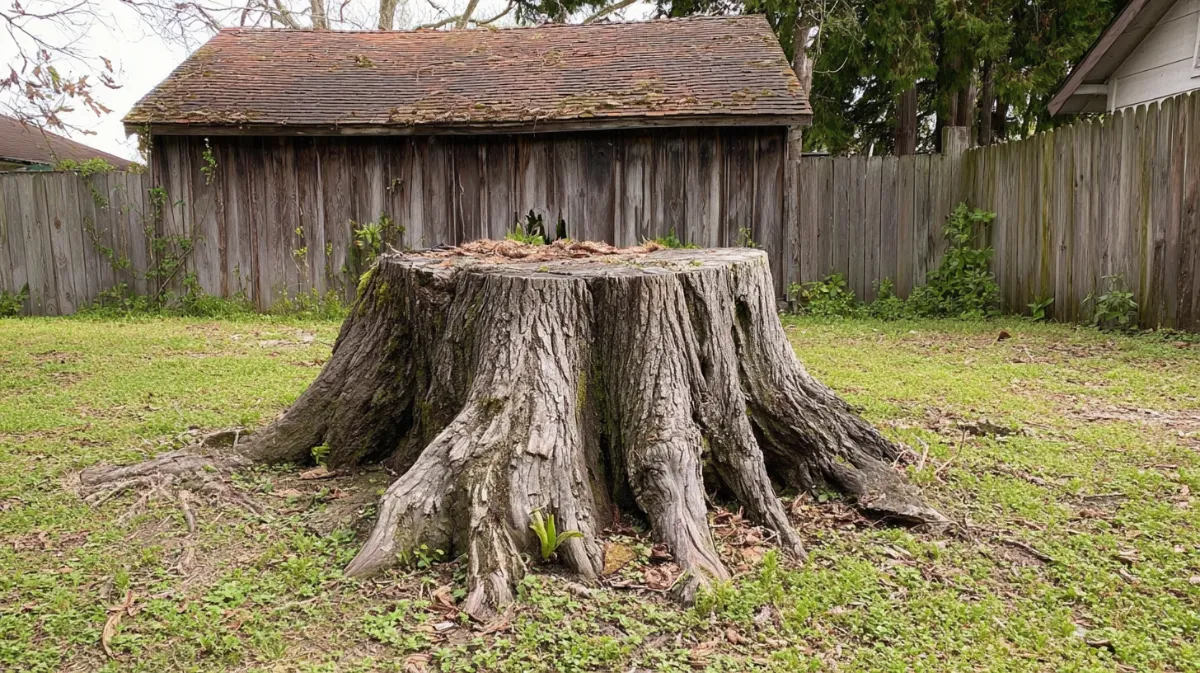
Apple stumps are small next to a big oak, but orchards rarely leave just one. A converted orchard can have dozens of old stumps in rows, some hidden in tall grass, some throwing up suckers every spring. Grinding them clears the way for a lawn, a garden or new plantings. If you're planting fruit trees again, set the new ones between the old rows instead of right on top of a ground stump, so the young roots start in fresh soil. We quote orchard jobs as one bundle and clear the rows in a single visit once the ground is firm. Old orchard ground can also hide irrigation pipe and fence posts from decades ago, so we walk the rows before we start. Sandy loam drains better than the clay further east, so we can often get onto these properties sooner after the rains. If you're further out toward the river, we cover Guerneville and the redwood country around it too.
Sandy soil, wandering roots
Goldridge soil is easier on a grinder than heavy clay, but it lets roots wander wide and shallow, so surface roots are a common complaint here. They lift garden paths, crack old walkways and push through raised beds. Once a stump is ground, its roots stop growing and slowly break down, and the ones already lifting something can come down right away with surface root grinding. Plan on topping up the spot with a little soil after the first wet season, as the leftover wood rots away. West county driveways and gravel lanes are often long and narrow, so tell us how to get in and we'll bring a machine that fits. Redwood stumps out toward the coast are a different animal: big, soft and quick to sprout, so we grind those a little deeper.
Common Questions
It shouldn't. We bring a compact grinder in along the path of least damage, lay boards over soft beds and tarp nearby plants so chips don't bury them. Raised bed frames and drip lines get pointed out before we start, and we work around them. When we're done, we rake the grindings out of the beds and leave the hole ready to fill with soil, or pile the chips for your paths.
Apple trees, especially older orchard trees on vigorous rootstock, push suckers from the stump and roots after the top is cut, and they try again every spring. A grind that goes under the soil line removes the crown, where most of those suckers start. Any that come up from the outer roots afterward are weaker, and clipping them a few times finishes the job.